Reconstituting a peptide comes down to three numbers you already have: the vial strength in mg, the bacteriostatic water you add in mL, and your target dose. Feed those to a peptide reconstitution calculator and it returns your concentration, the units to draw on the syringe, and how many doses the vial holds.
The math is short. It just has one part that trips almost everyone.
The three formulas
Concentration (mg/mL) = vial mg ÷ water mL
Units to draw on a U-100 syringe = (target mcg ÷ (vial mg × 1,000)) × water mL × 100
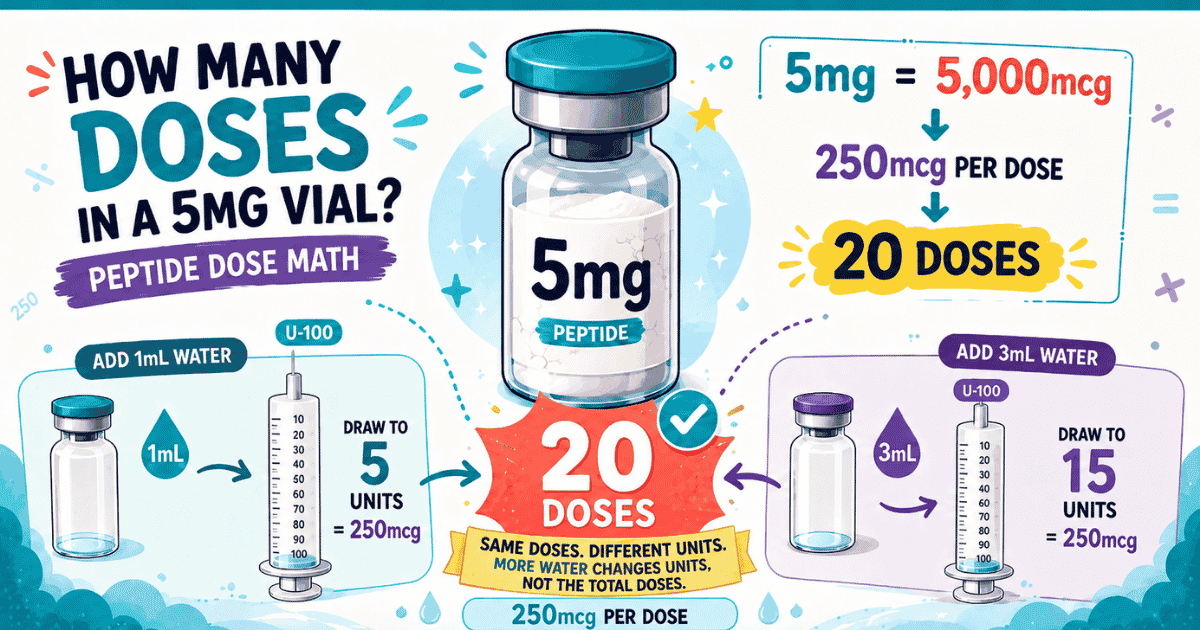
Doses per vial = (vial mg × 1,000) ÷ target mcg
The first tells you how strong the solution is. The second tells you how far to pull the plunger. The third tells you how long the vial lasts. That's the whole job of a reconstitution calculator.
A worked example with real numbers
Take a 5mg vial, 2mL of bac water, and a 250mcg target dose.
- Concentration: 5 ÷ 2 = 2.5 mg/mL
- Units: (250 ÷ 5,000) × 2 × 100 = 10 units
- Doses: 5,000 ÷ 250 = 20
So each dose is a clean 10 units on a U-100 syringe, and the vial gives 20 doses. Notice the water volume shows up in the units formula but not in the dose count. That's the part worth slowing down on.
Bac water changes your units, not your total doses
Adding water dilutes the compound. It does not add or remove any. A 5mg vial holds 5,000mcg whether you reconstitute with 1mL or 3mL, so the dose count stays fixed at your target. What shifts is concentration, and therefore how many units you draw per dose. More water means a weaker solution and a bigger pull on the syringe for the same milligrams. The how-many-doses breakdown walks through this at every vial size, and the calculator page has a table of units per dose for 5, 10, 15 and 20 mg vials at 1, 2 and 3 mL.
The syringe scale trap: U-100 vs U-50 vs U-40
A U-100 syringe marks 100 units per mL. A U-50 marks 50 units in that same mL, a U-40 marks 40, and a U-30 marks 30. The identical volume of liquid reads as a different number depending on which barrel you're holding.
This is the classic reconstitution error, and it catches insulin users too when they switch syringe types. Ten units on a U-100 is the same liquid as five units on a U-50. The liquid didn't change. The ruler did. Check the scale printed on the barrel before you trust any unit number, yours or a calculator's.
Working backward from a clean number
Most people solve forward: pick a water volume, see what units come out. Reverse thinking flips it. Decide the units you want to draw, then solve for the water volume that lands you there.
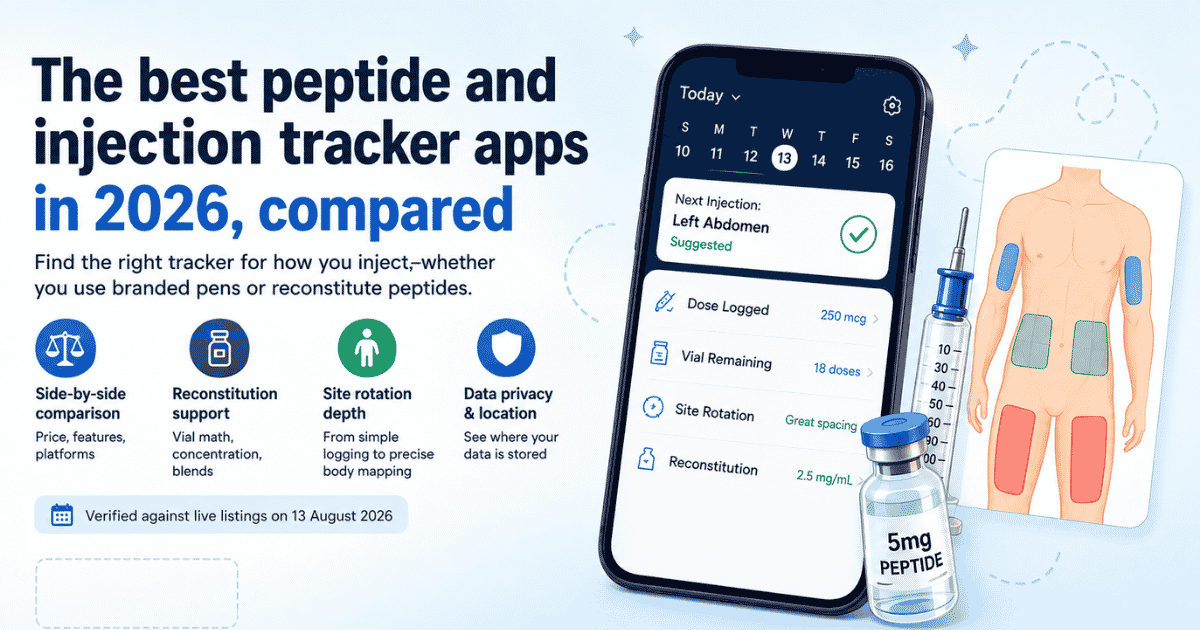
Say you want 250mcg to sit at exactly 10 units on a U-100. Rearranged, the water volume is 2mL, which is why the example above is so tidy. Reconstitute the same vial with 1.7mL and that dose becomes 8.5 units, a number nobody wants to eyeball at 7am. PinTrax, a privacy-first injection manager built around this math, has a reverse mode for exactly this, and it tracks vial remaining as you log so the dose count stops being mental arithmetic.
Blends: two compounds, one water volume
A blend vial holds more than one compound mixed into a single bac water volume. Every draw pulls each component in the same proportion, so you cannot dose one without dosing the others. Run the concentration formula separately for each compound against the shared water volume, and a given number of units then delivers a fixed amount of each. A peptide blend calculator does both strands at once; PinTrax handles blends in the same reverse-aware way it handles single vials.
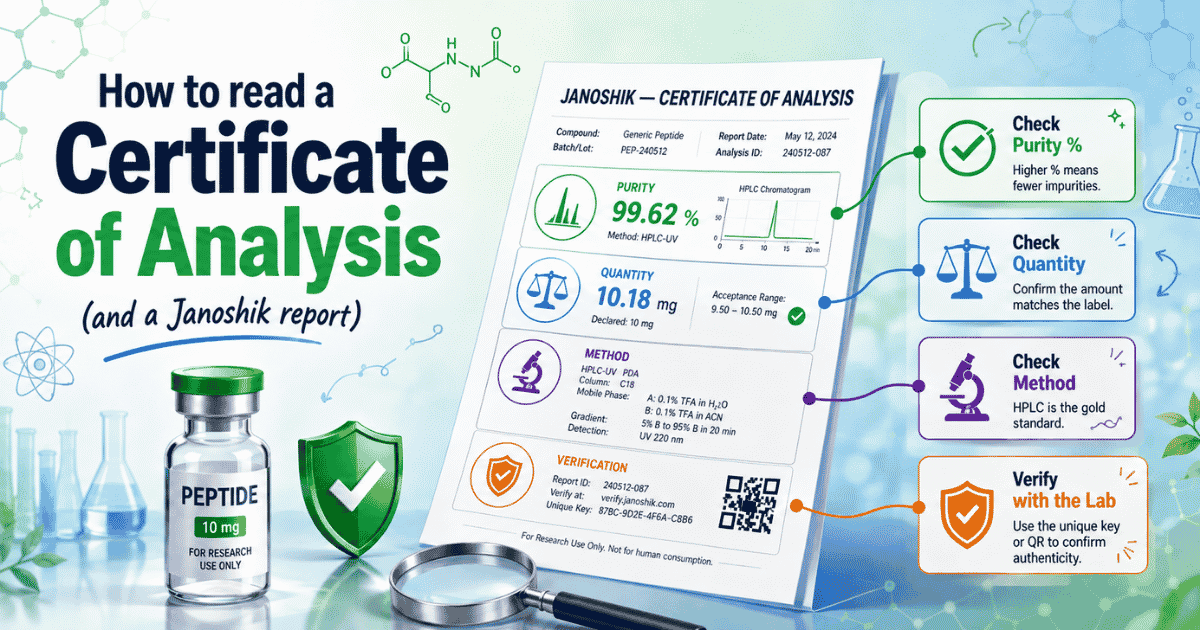
One more input the math assumes: that the vial contains what the label says. A stated purity below 100% means each draw delivers slightly less than the arithmetic suggests, which is what a Certificate of Analysis reports and what good dose math accounts for.
FAQ
How much bac water do I add to a 5mg vial?
There's no single correct volume. Water sets concentration, not dose count, so choose the amount that lands your target dose on an easy-to-read unit mark. For a 5mg vial, 2mL puts a 250mcg dose at 10 units on a U-100 syringe. 1mL or 3mL both work; they just change the units you draw.
How many units is 250 mcg?
It depends entirely on concentration. At 2.5 mg/mL, which is a 5mg vial reconstituted with 2mL, 250mcg is 10 units on a U-100 syringe. Change the water volume and that number changes.
Why does my dose look different on a different syringe?
U-100, U-50, and U-40 syringes print different unit scales over the same volume. Ten units on a U-100 is the same liquid as five units on a U-50. Always know which scale the barrel uses.
How many doses are in a 10mg vial?
Same formula, double the compound. At 250mcg per dose, a 10mg vial gives 40 doses; at 500mcg, 20. Water volume doesn't affect the count.
What happens if I add more water?
Your dose count stays the same. More water lowers the concentration, so you draw more units per dose, but the vial still holds the same total compound.